Don’t overlook this. It is usually unsafe when one uses a drain cleaner that has a septic system. It is sometimes allowed in extremely low doses, but constant consumption silently develops issues that subsequently cause the expense of repair. There is nothing, it may seem to you on the face of it, and that is the devil of the matter.
This is a guide of what actually occurs when you put a drain cleaner in a septic system, what kinds are risky, what are safer versions, and how you can remove clogs without harming the system. You must take this information seriously in order to make your septic system live long.
Key Takeaways
- Regular use of drain cleaners is not safe for septic systems — a one-time use likely won’t cause damage, but repeated use gradually kills the beneficial bacteria your tank depends on to break down waste.
- Not all cleaners are equally harmful — chemical caustic and acid-based cleaners are the most damaging to bacteria and pipes, oxidizing (bleach-based) cleaners are moderately risky, and enzyme-based cleaners are the safest option, though slower-acting.
- Damaged bacteria leads to bigger problems — as bacterial activity drops, sludge builds up faster, effluent becomes unstable, and untreated waste can eventually clog the drain field — a far costlier issue than a slow sink.
- Mechanical methods are the safer fix — plungers, drain snakes/augers, and professional hydro jetting clear clogs physically without introducing chemicals that disrupt the tank’s ecosystem.
- Prevention beats cleaning products — avoid pouring grease, food scraps, and excess hair down drains, install drain screens, limit antibacterial product use, and schedule septic pumping every 3–5 years.
Why septic systems are sensitive to chemicals
It is not plumbing that makes a septic system effective, but biology. The waste inside the tank is divided into layers whereby the solid is found at the bottom of the tank, the oils on the top of the tank, and the layer in the middle flows out to the loan maintenance field. This is only possible in the presence of bacteria.
These bacteria:
- Break down organic waste
- Reduce solid buildup
- Keep the system balanced
In case the number of bacteria decreases, everything decelerates. Waste is no longer decomposing as it should be; Sludge is accumulating at a much quicker pace, and the system is ineffective.
Now put yourself in the position of a drain cleaner. It is deteriorated organic matter, hair, grease, and food. That, however, also implies that it can damage the bacteria in your septic tank. That is the conflict.
Is it safe to use a drain cleaner with a septic system?
The practical answer is no for regular use. Occasional use might not cause immediate damage, but it is still not recommended as a routine solution.
Here’s how to look at it clearly.
One-time use:
- Usually does not destroy the system
- May slightly reduce bacterial activity
Repeated use:
- Gradually kills beneficial bacteria
- Alters tank chemistry
- Leads to long-term issues
The problem is not one application. The problem is the pattern of use. Most clogs are not fully resolved by chemical cleaners, so people keep using them. That repeated exposure is what creates damage over time.
What happens inside your septic tank after using a drain cleaner?
The process is not obvious, so it helps to break it down step by step.
First, the cleaner goes into your drain and starts reacting with the clog. Some of it works in the pipe. Not all of it stays there.
Second, leftover chemicals travel into the septic tank. This is where things change.
Inside the tank:
- The cleaner mixes with wastewater.
- The pH level shifts
- Bacterial activity is disrupted
Strong cleaners can kill bacteria quickly. Even moderate cleaners can weaken them. Over time, the system loses efficiency.
As bacterial activity drops:
- Solids accumulate faster
- Sludge layer thickens
- Effluent becomes less stable
Eventually, this affects the drain field. When untreated waste moves into the drain field, it can clog soil pores and reduce filtration. That is a much bigger problem than a slow sink.
Types of drain cleaners and their impact
Not all drain cleaners behave the same way. Some are much more harmful than others.
Chemical caustic cleaners
These are the most common products on store shelves. They usually contain sodium hydroxide or similar compounds.
They work by generating heat and breaking down organic material quickly. That speed is exactly why people use them.
The downside is significant:
- They kill bacteria in the septic tank.
- They can damage pipes over time.
- They create chemical imbalance.
These are not considered safe for septic systems, especially if used more than once.
Acid-based cleaners
These are stronger and more aggressive. They are often used for severe clogs.
They dissolve material rapidly, but they come with high risk:
- Severe damage to bacterial ecosystems
- Potential harm to pipes and tank components
- Environmental concerns if they reach the drain field
These should be avoided entirely in homes with septic systems.
Oxidizing cleaners
These include bleach-based and peroxide-based products.
They are less aggressive than acid cleaners but still problematic:
- They reduce bacterial activity.
- They disrupt natural decomposition.
Frequent use can still lead to system imbalance.
Enzyme-based cleaners
These are marketed as septic-safe, and in many cases, they are the better option.
They use:
- Enzymes
- Beneficial bacteria
Instead of destroying organic material chemically, they support natural breakdown.
They are safer because:
- They do not kill beneficial bacteria.
- They may improve system balance.
But they are not a complete solution. They work slowly and are not effective for serious clogs.
Why drain cleaners don’t solve the real problem
Most clogs are not just a one-time blockage. They are a buildup.
Common causes include:
- Grease lining the pipes
- Hair accumulation
- Soap residue
- Food particles
Chemical cleaners might clear part of the clog, but they rarely remove everything. Residue stays behind. That residue becomes the base for the next clog.
So the cycle looks like this:
- Use cleaner
- Temporary improvement
- Clog returns
- Use more cleaner
Each cycle adds more chemicals to the septic system. This is how long-term damage starts without being obvious.
Safer ways to clear drains without harming your septic system
There are better options that don’t involve chemical damage.
Mechanical methods
Plungers are simple but effective for minor clogs. They create pressure that dislodges blockages without adding anything to the system.
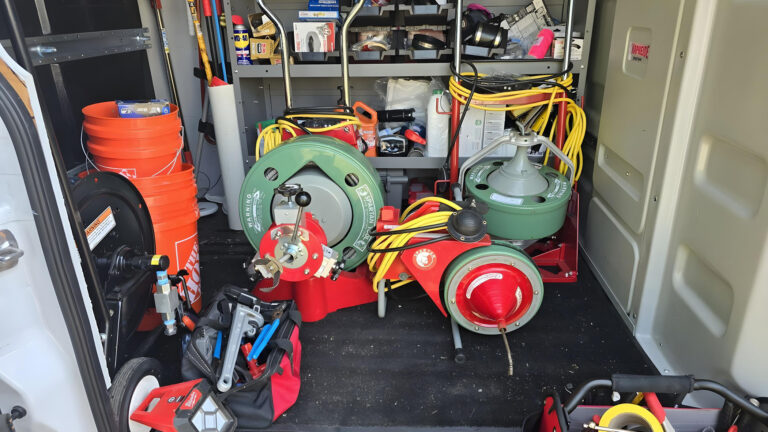
Drain snakes or augers physically remove debris. They are especially effective for hair and solid buildup.
Professional hydro jetting uses high-pressure water to clean the entire pipe. It removes buildup completely instead of partially dissolving it.
Crest Plumbing often recommends mechanical or professional cleaning because it addresses the root cause without harming the septic system.
Maintenance methods
Hot water flushing can help with grease if done regularly. It’s not a fix for severe clogs but helps prevent buildup.
Baking soda and vinegar create a mild reaction that can loosen debris. It is safe but limited in effectiveness.
Enzyme treatments can support bacterial balance and reduce buildup over time. These are best used as preventive maintenance, not emergency solutions.
Signs your septic system is being affected
If drain cleaner use is causing issues, the signs usually show up gradually.
You might notice:
- Multiple slow drains
- Persistent odors inside or outside the home
- Gurgling sounds in pipes
- Sewage backups
- Wet or soggy areas near the drain field
These are not small problems. They indicate that the system is not functioning properly.
When using a drain cleaner might be acceptable
There are limited situations where using a drain cleaner may be reasonable.
For example:
- An emergency clog
- No access to tools or professional help
- Small, controlled amount
Even then:
- Avoid strong chemical cleaners.
- Use products labeled septic-safe.
- Do not repeat frequently.
This should be treated as a temporary measure, not a habit.
The long-term cost of using drain cleaners with a septic system
This is where the real impact shows up.
Frequent use of chemical cleaners can lead to:
- Increased need for septic pumping
- Reduced efficiency of the drain field
- Pipe damage
- Full system failure
Repair costs can range from moderate to very high. Replacing a septic system is not a small expense. It is something most homeowners want to avoid entirely.
What professionals recommend
Most professionals follow a simple approach. Avoid chemical drain cleaners whenever possible.
Instead:
- Use mechanical methods
- Maintain the system regularly.
- Address problems early
Crest Plumbing sees the same pattern repeatedly. Homes that rely on chemical cleaners tend to develop larger issues over time. Homes that use proper maintenance and mechanical cleaning tend to have fewer problems.
Preventing clogs in a septic system
Prevention is more effective than any cleaner.
Start with what goes down your drain. Avoid grease, food scraps, coffee grounds, and excessive hair buildup. These are the most common causes of clogs.
Install drain screens. They are simple and inexpensive but prevent a lot of debris from entering the system.
Schedule regular septic maintenance. Pumping the tank every few years helps prevent buildup from reaching critical levels.
Be mindful of water usage. Too much water at once can overload the system and reduce its effectiveness.
Limit the use of antibacterial products. They can reduce the bacteria your system depends on.
Is it safe to use a drain cleaner with a septic system?
It is not the safest option. Occasional use may not cause immediate damage, but repeated use—especially with chemical cleaners—can disrupt the system and lead to long-term problems.
If you want to keep your septic system working properly:
- Avoid harsh chemicals
- Use safer alternatives
- Handle clogs with the right methods.
That approach reduces risk, lowers long-term costs, and keeps your system stable.
FAQs
Can septic-safe drain cleaners be used regularly?
They are safer than chemical cleaners, but they should still not be relied on as a regular solution for clogs.
What is the safest way to clear a clogged drain?
Mechanical methods such as plunging or snaking are the safest and most effective.
Will one use of a chemical cleaner damage my system?
Usually not, but repeated use increases the risk significantly.
Are natural solutions enough for serious clogs?
No, they are better suited for maintenance rather than major blockages.
When should I call a professional?
If clogs keep returning or multiple drains are slow, it is time to get professional help.
How often should a septic system be serviced?
Most systems require pumping every three to five years, depending on usage.