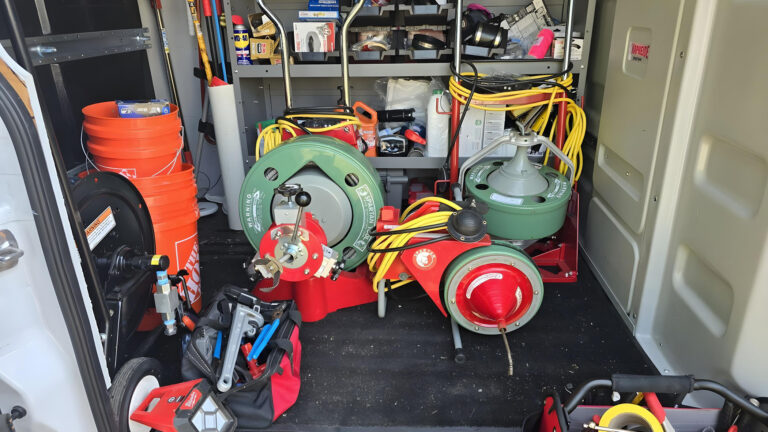
If you have a slow drain, repeating clogs, gurgling toilets, or a sewer smell in your basement, don’t wait for the problem to get loud and expensive. Address it now. This article is a practical, field-forward guide to Sewer & Drain Cleaning in Barnegat & Ocean County NJ — what causes common failures, how professionals diagnose and fix them, what methods actually work, what you should expect during a service visit, and how to keep your system running with sensible, low-effort maintenance.
Quick checklist—what to do right now if you have a backup
- Stop using water in the house if sewage is backing up.
- If a toilet or floor drain is overflowing, shut off the main water only if directed by a plumber. (Turning off water unnecessarily can create other problems.)
- Call a licensed plumber that offers emergency sewer and drain service.
- Avoid chemical drain cleaners: they can damage pipes and make repairs harder.
- Take pictures of any visible sewage, backups, or damaged fixtures — those help technicians diagnose remotely.
Why sewer & drain problems need prompt attention
Plumbing issues that start small often become larger, costlier problems if ignored. A slow sink or a recurring clog may be a surface symptom of a deeper main line problem: tree roots, collapsed pipe sections, or a failing sewer connection. Those can cause raw sewage to back up into basements or low fixtures, lead to structural damage from saturated soils, and create indoor air quality hazards from sewer gas and mold.
Three immediate risks to understand:
- Health risk—raw sewage contains pathogens. Any contact or airborne spread from sewer gasses is a health hazard.
- Property damage—prolonged backups can saturate floors, drywall, insulation, and foundations. The costs multiply fast.
- Hidden escalation — a simple clog cleared with a snake may return if the real cause is a damaged main line. Temporary fixes delay the inevitable and often increase total cost.
How to read the warning signs and what each one usually means
- Slow drains in multiple fixtures: Often indicates a partial clog in the main drain or sewer line, not just a single trap.
- Gurgling toilets or drains: Air trapped in the system, commonly from a blockage downstream.
- Sewer smell in basement or near drains: Possible dry trap, cracked vent, or compromised sewer line allowing gases into the home.
- Water backing up in lower fixtures when another fixture runs: Strong sign of main line obstruction or sewer line failure.
- Lush patches in the yard or sinkholes: Could indicate leaking sewer line or septic system failure (if applicable).
- Recurring clogs after snaking: Likely root intrusion or hardened scale/grease in the pipe interior.
Each sign demands a specific diagnostic approach. The right first step is a camera inspection of the line.
Diagnostic tools professionals use and why they matter
- Sewer camera inspection (video scope): A waterproof camera on a flexible rod is fed into the line to see blockages, cracks, roots, sags, and joining problems. This is the single most useful diagnostic step. It tells the technician whether a simple cleaning will work or if a repair/replacement is needed.
- Hydrostatic pressure tests: Used sometimes to check for leaks in pressurized systems or to confirm sealing after repairs.
- Water flow tests & dye tests: To isolate which line is failing, especially in multifamily or commercial sites.
- Locating equipment: After a camera run, techs can locate the exact position under the yard to mark excavation points precisely.
- Gas detectors: When sewer gas odors are reported, pros may test for methane/H2S levels before entering confined spaces.
If a contractor skips camera inspection and proceeds to aggressive repairs, ask why. Video evidence protects both you and the plumber from misdiagnosis.
Core services explained—what they do and when they’re needed
Kitchen drain cleaning
What causes it:
- Grease congealing on the pipe walls.
- Food scraps and coffee grounds.
- Accumulated soap and detergent residue.
What professionals do:
- Remove visible debris from traps and pop-up assemblies.
- Use motorized snakes with appropriate heads for kitchen lines.
- Hydro jetting if grease is hardened and lining the pipe.
- Camera confirmation after cleaning to ensure no residual buildup.
When to call:
- If plunging and home auger don’t fix it, or if multiple kitchen fixtures are slow.
Bathroom drain cleaning
What causes it:
- Hair and soap scum in shower and bathtub drains.
- Toothpaste and product residue.
- Foreign objects were accidentally flushed down the toilet.
What professionals do:
- Mechanical snaking focused on hair and organic clogs.
- Use of rooter heads that cut and extract hair.
- Camera inspection for repeated or stubborn clogs to check for vent issues or pipe damage.
When to call:
- Repeated slow showers, frequent clogs, or foul odors from bathroom drains.
Main line sewer cleaning
What causes it:
- Tree roots penetrating joints.
- Grease and mineral buildup restricting flow.
- Collapsed, shifted, or sagging pipes (bellies).
- Invasive tree roots combined with offsets in older clay or cast-iron pipes.
What professionals do:
- Start with camera inspection to locate the exact problem.
- Hydro jetting to scour grease, roots, and scale.
- Mechanical cutting for massive root balls if necessary.
- Provide a repair recommendation if the line is cracked, collapsed, or has a severe belly.
When to call:
- When multiple drains are affected, backups occur during heavy use, or water backs up into the lowest fixtures.
Sewer line cleaning vs. sewer line repair
Cleaning removes obstructions and restores flow. Repair fixes physical damage (cracked pipe, broken joint, collapsed section). Sometimes both are needed: a cleaning first to allow a camera assessment, then a targeted repair. If the line is beyond repair, a replacement or trenchless rehabilitation (e.g., cured-in-place pipe lining) may be recommended.
Advanced cleaning and rehabilitation methods—pros and cons
Hydro jetting
What it is:
- High-pressure water (thousands of psi) sent through the pipe to blast away grease, scale, roots, and debris.
Pros:
- Thorough cleaning, not just a tunnel through the clog.
- Effective on grease and mineral scale.
- Restores pipe flow close to new condition.
Cons:
- Can expose weak spots in old pipes; if the pipe is brittle or collapsed, jetting can make problems worse. That’s why camera inspection before jetting is essential.
- Requires professional equipment and training.
Motorized drain snaking (augering)
What it is:
- Rotating cable with cutting or grabbing heads driven down the pipe.
Pros:
- Good for hair and localized clogs.
- Quick and cost-effective for certain blockages.
Cons:
- Can push material further into the system if improperly used.
- Less effective on widespread grease and scale.
Mechanical root cutting
What it is:
- Powered cutters attached to a cable remove root mass from the pipe interior.
Pros:
- Effective when roots are the main issue.
- Allows the line to flow again without immediate excavation.
Cons:
- Roots will regrow unless corrective action is taken (pipe lining or replacement).
- Only a temporary solution if roots indicate compromised joints or damaged pipe.
Trenchless pipe rehabilitation (CIPP — cured-in-place pipe)
What it is:
- A resin-saturated liner is inverted or pulled into the old pipe and cured in place to form a new pipe within the old one.
Pros:
- Minimizes excavation.
- Long-lasting (often 50 years with proper installation).
- Less disruption to landscaping, driveways, and sidewalks.
Cons:
- Not always possible if the pipe has collapsed completely or if the line size/shape prevents installation.
- More expensive than a cleaning but often cheaper than full open-cut replacement when factoring in landscaping or pavement repair.
Spot repair and pipe bursting
- Spot repair fixes a short segment of damaged pipe; pipe bursting replaces the entire line by fracturing the existing pipe and pulling a new pipe into place. Both have specific site and condition requirements.
What to expect during a service visit (step-by-step)
- Initial intake: You describe symptoms. Be specific about which fixtures are affected and when the issue started.
- Technician arrival & safety walk: The tech inspects visible fixtures, checks for immediate hazards, and locates cleanouts.
- Camera inspection: If the contractor is thorough, they’ll run the camera to identify the root cause. You should be offered the option to view video or receive a recording.
- Cleaning strategy: Based on the video, the tech recommends hydro jetting, snaking, root cutting, or scheduling repairs. They should explain the pros/cons.
- Execution: Technician performs cleaning. You’ll hear equipment noise—jetting and root-cutting are loud.
- Post-clean camera run: Confirms the job is done and documents the condition of the line.
- Reporting & next steps: The tech explains what was found, shows video evidence if available, and gives options: maintenance schedule, immediate repair, or monitor.
- Invoice & warranty info: Get clear details on what was covered, any warranties on the work, and preventative recommendations.
Always ask for before-and-after footage and a written summary. That protects you and clarifies what was done.
Emergency sewer & drain cleaning—what qualifies and how crews respond
Immediate emergency criteria:
- Sewage backing into living spaces.
- Sewage in basement or first floor drains.
- Continuous overflow from a sewer cleanout.
- Major break or exposed sewer pipe.
Emergency response priorities:
- Contain the issue — stop further use of lines as feasible.
- Minimize property damage — temporary measures like bypass pumping or isolation of fixtures.
- Restore basic flow — cleaning or emergency repairs to prevent further backup.
- Plan permanent fix — camera inspections and scheduling repairs or replacements.
If you call an emergency number, expect a quick triage over the phone, followed by an expedited dispatch. Have clear access to cleanouts and main shutoffs and, if possible, photos sent to the provider before arrival.
Why choose a local, licensed plumber (and what to check)
Local pros know the geology, soil conditions, and neighborhood tree types that commonly affect sewer lines in their area. They are also more likely to be responsive for repeat visits.
Before hiring:
- License & insurance: Always verify. Insurance should include general liability and workers’ comp.
- Equipment: Do they have camera inspection gear and hydro jetting equipment?
- References & reviews: Local reputation matters. Ask for recent references.
- Written estimates and clear scope: Avoid vague guarantees; get it in writing.
- Warranties: What’s covered and for how long? Cleaning usually has short-term guarantees; repairs and new installs often have longer warranties.
A cheap, unlicensed service may save money upfront and cost much more later in repairs and property damage.
Areas commonly served practical note for residents
If you live in or near the towns of Barnegat and the broader Ocean County area, service providers should know local permit processes and typical sewer system configurations. For properties in older neighborhoods, expect older pipe materials like clay or cast iron, which influence repair strategies. For newer developments, PVC and HDPE pipes are more common, and repair options differ.
Preparing your property for a sewer/drain service visit
- Clear access to the cleanout and basement area. Move boxes, furniture, or stored items away from the work zone.
- Secure pets. Even calm pets can become a safety hazard around heavy equipment.
- Make sure someone over 18 is available to answer questions and make decisions.
- If there’s standing sewage, plan for cleanup: document damage for insurance and move valuables out of the affected area.
Cost factors—what affects pricing
Costs vary widely depending on variables. Expect service providers to estimate based on visible symptoms and then confirm after camera inspection.
Primary cost drivers:
- Type of service: A simple snaking is less than hydro jetting; cleaning is less than repair or replacement.
- Pipe material and age: Older clay or cast-iron pipes may require more extensive remediation.
- Length and depth of the line: Deeper lines and long lateral runs add labor and equipment time.
- Root intrusion severity: Heavy root cutting adds hours and equipment wear.
- Need for excavation vs. trenchless: Open-cut replacement is usually costlier when landscaping, driveways, or pavement restoration are required. Trenchless methods reduce surface restoration costs but involve specialized materials and labor.
- Permits and inspections: Municipal permits and required inspections add time and fees for major repairs/replacements.
- Accessibility: Tight yards, obstacles, and required traffic control increase labor and time.
A responsible contractor will present a range of potential costs and tie them to what they find on camera.
Preventative maintenance—practical homeowner tips that actually help
Regular habits that pay off
- Never pour grease down the kitchen sink. Pour cooled grease into a container and dispose with trash.
- Use sink strainers on kitchen and bathroom drains; empty them regularly.
- Avoid flushing anything other than toilet paper. Wipes (even “flushable”), feminine products, and paper towels clog lines.
- Run hot water and a little dish soap down the kitchen drain after greasy food prep to help pull grease into the trap rather than the pipe. (This is mitigation, not a fix.)
- For households with trees near sewer lines: schedule annual inspections. Roots are easier to deal with before they destroy a joint.
Smart maintenance schedule
- Every 1–2 years: Professional camera inspection for older homes or homes with heavy landscaping.
- Every 2–3 years: Hydro jetting for commercial kitchens or homes with heavy grease use.
- Annually: Check visible cleanouts and basement drains; ensure traps have water to prevent sewer gas.
- After heavy storms or nearby digging: Reinspect if problems start appearing — soil movement or root conditions can change.
What to avoid
- Don’t use chemical drain cleaners regularly. They can degrade pipe joints and make professional repairs more difficult.
- Don’t attempt to use a mechanical auger beyond what a homeowner-size unit is designed for; it can damage fixtures and pipes.
Residential vs. commercial considerations
Residential and commercial systems differ in scale, load, and damage patterns.
Residential notes
- Typical issues: hair, grease, small root intrusions, and slower buildup.
- Many homes have older lateral lines that are more vulnerable.
- Preventative maintenance is an affordable way to avoid major disruption.
Commercial notes
- Restaurants and commercial kitchens require strict grease management (grease traps, interceptors) and frequent cleaning.
- High-usage buildings (multifamily, retail) need scheduled maintenance contracts.
- Business continuity is a factor: downtime costs must be considered when scheduling repairs or cleanings.
If you manage a property, tie maintenance schedules to tenant agreements and document work performed.
When a cleaning isn’t enough — repair and replacement signals
Cleaning restores flow. It does not fix structural defects. You need repair or replacement when:
- Camera shows cracked, broken, or collapsed pipe sections.
- Offsets or sags (“bellies”) trap solids and cause recurring backups.
- Joints are failing and allowing roots to enter.
- Pipe material is so corroded that cleaning would expose more failure.
- Repeated root intrusion within short intervals indicates joint failure rather than just a cutting issue.
A professional should show you the camera footage and explain options: spot repair, trenchless lining, or full replacement. They should also explain life expectancy of each option and give a cost and timeline.
DIY triage tools and what they do
- Plunger: Good for simple, localized blockages in sinks and toilets. Use a flange plunger for toilets.
- Hand auger/snake (home size): Works on small sink clogs close to the fixture. Don’t force it past major resistance.
- Boiling water: For grease softening in minor kitchen clogs (use with caution on PVC fixtures).
- Plumbing vent checks: If multiple fixtures drain slowly only occasionally, a blocked vent can cause trapped air—this often requires a pro.
If DIY attempts fail or the situation worsens, stop and call a pro. Further DIY can push clogs deeper, rupture old joints, or create sanitation hazards.
Insurance & documentation—protecting yourself after damage
If raw sewage caused property damage:
- Document everything with photos and video before cleanup.
- Save receipts for cleanup, repairs, and mitigation.
- Call your insurance company to report the loss and ask about coverage for sewage backups—coverage depends on your policy and may require a separate endorsement.
- Use licensed contractors and keep their reports and camera footage. Insurance companies often require professional documentation for claims.
Sample maintenance plan for a typical single-family home
This is a practical, low-burden schedule:
- Year 1 (baseline): Camera inspection of lateral and main line, then hydro jetting if scale/grease/rooting observed.
- Year 2: Check cleanouts and traps; homeowner change or cleaning of strainers.
- Year 3: Camera re-inspection if problems reappear; otherwise proactive hydro jetting every 2–3 years for older systems.
- Continuous: Avoid flushing inappropriate items and eliminate grease disposal down the drain.
Keep records of each professional visit and video files from camera runs.
Common myths and straight answers
- Myth: Chemical drain cleaners are safe for regular use.
Fact: They can damage pipes and complicate professional repairs. - Myth: Once a line is cleaned, roots won’t return.
Fact: Roots regrow unless the pipe joints are sealed or the line is replaced/lined. - Myth: Hydro jetting will always damage old pipes.
Fact: When done after a camera inspection by trained technicians, jetting is safe and effective; but weak, collapsed pipes are not candidates for jetting. - Myth: Small clogs mean a small problem.
Fact: Recurring small clogs often indicate a larger issue downstream.
Frequently Asked Questions
Below are direct answers to common concerns, written so you can act fast.
Q: How do I know if it’s a main line problem or a local fixture clog?
A: If more than one fixture is slow or backups occur in lower-level drains when upper fixtures are used, it’s likely a main line problem. A single slow sink usually indicates local trap or fixture clogging.
Q: Is hydro jetting safe for old pipes?
A: Not always. Hydro jetting is highly effective but should be preceded by a camera inspection. If the pipe is brittle, cracked, or collapsed, jetting can worsen damage. Responsible technicians inspect first and choose the safest method.
Q: Can I use chemical drain cleaners to fix recurring clogs?
A: Regular use of chemical cleaners is not recommended. They can erode pipe materials and are often only a temporary fix. They also create hazards for technicians later attempting repairs.
Q: How often should I get a professional cleaning or inspection?
A: For older homes or homes with trees over sewer lines, an inspection every 1–2 years is sensible. For most homeowners, a camera inspection every 2–3 years or hydro jetting every 2–4 years is sufficient unless symptoms prompt earlier service.
Q: What causes roots to enter sewer lines?
A: Roots seek moisture and nutrients. Small leaks at joints or porous pipe materials attract roots. Once a root enters through a joint or crack, it grows and can create a blockage and further damage.
Q: What’s the difference between spot repair, lining, and replacement?
A: Spot repair fixes a limited damaged section. Lining (CIPP) installs a new pipe inside the old pipe without major excavation. Replacement removes the old pipe and installs a new one, usually requiring excavation. Choice depends on the condition and length of damaged sections.
Q: Will insurance cover sewer line replacement?
A: Policies differ. Some homeowners’ policies cover sudden sewer backups if you have a specific endorsement. Gradual wear or tree root damage may not be covered. Document damage and consult your insurer.
Q: How long does a typical sewer cleaning take?
A: A simple snaking or localized clean can take 30–90 minutes. A full main line camera inspection and hydro jetting may take 1–3 hours depending on complexity. Repairs or replacements take longer and depend on scope.
Q: Do you need a permit to replace a sewer line?
A: Many municipalities require permits for sewer replacements and inspections. Licensed contractors typically handle the permit process. Ask the contractor to confirm permit responsibilities before work begins.
Q: Can I get a transcript or a recording of the camera inspection?
A: Yes. Reputable companies provide video or images from camera inspections and a written report. Request this upfront.
Case study summaries—realistic scenarios
These are brief, realistic examples that show how problems develop and get solved.
Case 1 — Recurring bathroom backups in an older house
- Symptom: Slow shower and occasional toilet backups after heavy use.
- Diagnostic: Camera shows a sag (belly) in the lateral where solids collect.
- Solution: Hydro jetting to clear the immediate obstruction, then trenchless spot repair to correct the sag. Video provided before and after.
Case 2 — Kitchen sink clogs multiple times a month in a townhouse
- Symptom: Frequent kitchen clogs despite strainers, smells develop.
- Diagnostic: Camera shows thick grease coating and a partial blockage near the main.
- Solution: Hydro jetting to remove grease and a recommendation for grease trap maintenance and household habits. Follow-up inspection in 12 months.
Case 3 — Sewage in basement after heavy rain
- Symptom: Backup into basement drains during storms.
- Diagnostic: Camera and yard inspection show root intrusion and offset joint near the sewer cleanout.
- Solution: Emergency cleaning, temporary bypass, then trenchless lining for the affected run to minimize excavation. Landscape restoration coordinated post-work.
These scenarios illustrate the use of camera diagnostics and choosing an approach that minimizes cost and disruption while addressing root causes.
Choosing the right service agreement for homeowners and property managers
A service agreement shifts maintenance from reactive to proactive. Key elements:
- Regular inspections and cleaning intervals.
- Priority scheduling and reduced rates for repairs.
- Documentation and video reports for each visit.
- Clear cancellation and rescheduling terms.
For businesses or multiunit properties, an annual maintenance contract reduces emergency callouts and keeps operations running.
How Crest Plumbing approaches sewer & drain work what you should expect
- Local knowledge: familiarity with municipal processes and common local failure modes.
- Transparent diagnostics: camera inspection before substantive work.
- Clear explanation: what was found, possible options, pros/cons, and timelines.
- Documentation: video footage and a written report.
- Follow-through: recommendations for prevention and a maintenance plan.
Ask for proof of licensing and insurance, and request references from recent similar projects.
Final practical checklist—hiring & handling a sewer/drain problem
- Check license and insurance.
- Demand a camera inspection before major decisions.
- Get written estimates and a clear scope.
- Ask for a video and a written report.
- Ask about warranties and what they cover.
- Consider a maintenance plan if you have trees over the lateral or frequent issues.
- For emergencies, know the local emergency number for the company and have the main cleanout accessible.
Call to action—what to do now in sewer & drain cleaning in barnegat & ocean county nj
If you’re in Barnegat or anywhere in Ocean County and you have any of these signs — slow drains, recurring clogs, sewer odors, water backing into lower fixtures, or visible sewage — take action now. Call a licensed local plumber Contact Crest Plumbing, get a camera inspection, and insist on a clear, written plan for cleaning or repair that includes video documentation.