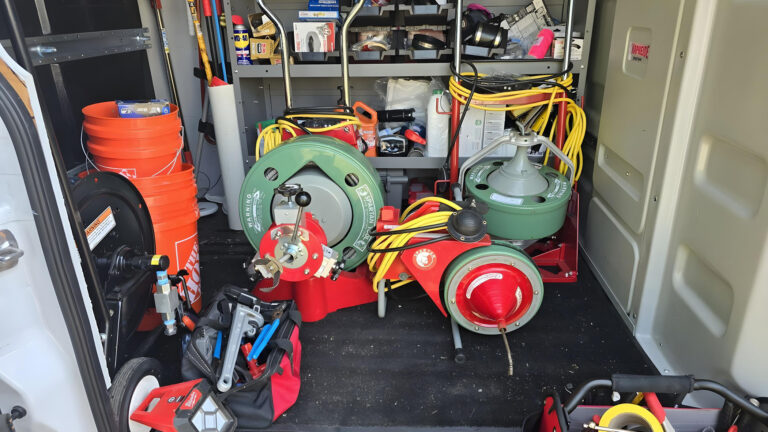
Trenchless water line replacement is a method used to replace underground water pipes without digging a long trench across the property. Instead of tearing up lawns, driveways, sidewalks, and landscaping, plumbers use specialized equipment to access the pipe from a couple of small entry points. From there, the new line is installed or pulled through the existing pipe path.
If you’re searching for trenchless main water line replacement near me, this is the process most professional plumbing companies—like Crest Plumbing—are referring to. It’s not experimental. It’s widely used, and in many cases, it’s the preferred option when conditions allow it.
Let’s break down how it actually works, step by step, without fluff.
What trenchless water line replacement actually means
Traditional water line replacement involves digging a trench from the street connection to the house. That can mean tearing through:
- Concrete driveways
- Landscaping
- Walkways
- Foundations in some cases
Trenchless methods avoid that by working underground with minimal surface disruption.
There are still small holes involved. Usually:
- One access point near the house
- One near the water main connection
But that’s it. No full-length trench.
Read About How Much Does a Main Water Line Replacement Cost?
The two main trenchless methods used
There isn’t just one technique. In practice, plumbers use two primary trenchless methods depending on the condition of the existing pipe.
1. Pipe bursting
Pipe bursting is used when the existing pipe is damaged, collapsed, or too deteriorated to reuse.
Here’s how it works:
- A bursting head is inserted into the old pipe
- The head is attached to a new pipe (usually HDPE)
- The machine pulls the head through the old pipe
- As it moves forward, it breaks the old pipe apart
- At the same time, it pulls the new pipe into place
So the old pipe is destroyed, and a new one replaces it in the same path.
This method is effective for:
- Severely corroded pipes
- Cracked or collapsed lines
- Older materials like galvanized steel or clay
2. Pipe lining (cured-in-place pipe)
Pipe lining is used when the existing pipe is still structurally stable but leaking or worn.
Here’s the process:
- A flexible liner coated with resin is inserted into the pipe
- The liner is inflated so it sticks to the inner walls
- Heat or time cures the resin, hardening it
- The liner becomes a new pipe inside the old one
This creates a smooth, sealed interior without removing the original pipe.
Best for:
- Minor cracks
- Leaks
- Internal corrosion
- Pipes that haven’t collapsed
Step-by-step process of trenchless replacement
Even though the method sounds complex, the workflow is pretty structured.
1. Inspection and diagnosis
The plumber starts with a camera inspection. This is not optional.
They need to check:
- Pipe material
- Level of damage
- Depth and alignment
- Whether trenchless is even possible
Not every job qualifies. If the pipe has severe misalignment or complete collapse in sections, trenchless might not work.
2. Planning and locating access points
Next step is figuring out where to dig the access holes.
Typically:
- One near the home’s water entry
- One near the city connection or meter
The goal is to minimize disruption while still allowing equipment access.
3. Shutting off and preparing the line
The water supply is shut off. The existing pipe is cleaned if needed.
For pipe lining, cleaning is critical because the liner needs proper adhesion.
For pipe bursting, they prepare the entry path for the bursting head.
4. Installing the new pipe
This is where the actual trenchless work happens.
- For pipe bursting: pulling the new pipe through while breaking the old one
- For pipe lining: inserting and curing the resin liner
Depending on the length and complexity, this can take several hours to a full day.
5. Reconnecting and testing
Once the new line is in place:
- Connections are restored
- The system is pressure tested
- Flow is checked
- Any leaks are addressed immediately
After that, water service is restored.
6. Minimal restoration work
Since there’s no trench, restoration is limited to:
- Filling the access holes
- Minor landscaping repair
- Small concrete patches if needed
This is one of the biggest advantages compared to traditional replacement.
Learn More About What Is a Slab Leak? A Complete Guide for Barnegat Homeowners
Materials used in trenchless water line replacement
Most trenchless replacements use high-density polyethylene (HDPE) pipes.
Reasons:
- Flexible
- Resistant to corrosion
- Long lifespan (often 50+ years)
- Fewer joints, which reduces leak points
For pipe lining, the material is a resin-saturated liner that hardens into a rigid pipe.
When trenchless is a good option
Trenchless is not always the answer. But it’s ideal in situations like:
- The pipe runs under a driveway or building
- Landscaping would be expensive to restore
- The pipe path is straight and accessible
- You want faster completion
Companies like Crest Plumbing typically evaluate this first before recommending full excavation.
When trenchless may not work
There are limitations.
Trenchless may not be possible if:
- The pipe has completely collapsed in multiple sections
- There are major offsets or misalignments
- The soil conditions are unstable
- The pipe route is too complex
In those cases, traditional digging may still be required.
Cost considerations
Trenchless water line replacement is often more expensive upfront than traditional digging. But that doesn’t tell the full story.
You need to factor in:
- No major landscaping repair
- No driveway reconstruction
- Less labor time
- Faster project completion
In many cases, the total cost ends up being comparable or even lower when you include restoration work.
How long it takes
Most trenchless water line replacements are completed in:
- 1 day for standard jobs
- 1–2 days for more complex setups
Traditional trenching can take several days, especially if restoration is extensive.
Why homeowners choose trenchless
The main reasons are practical:
- Less damage to property
- Faster turnaround
- Long-lasting materials
- Reduced disruption
It’s not about convenience alone. It’s about avoiding unnecessary reconstruction work.
The Real Value of Trenchless Water Line Replacement
Trenchless water line replacement is a structured, proven method. It’s not suitable for every situation, but when it works, it removes a lot of the mess and time associated with traditional pipe replacement.
If you’re actively looking for trenchless main water line replacement near me, the next step is not guessing—it’s getting a proper inspection. A qualified plumber needs to confirm whether your existing line qualifies for pipe bursting or pipe lining.
Crest Plumbing, like other experienced contractors, would typically start with that inspection and then walk you through which trenchless method fits your specific pipe condition.
That’s how the process should be handled. No assumptions, no shortcuts—just a clear assessment and the right method applied to the job.